
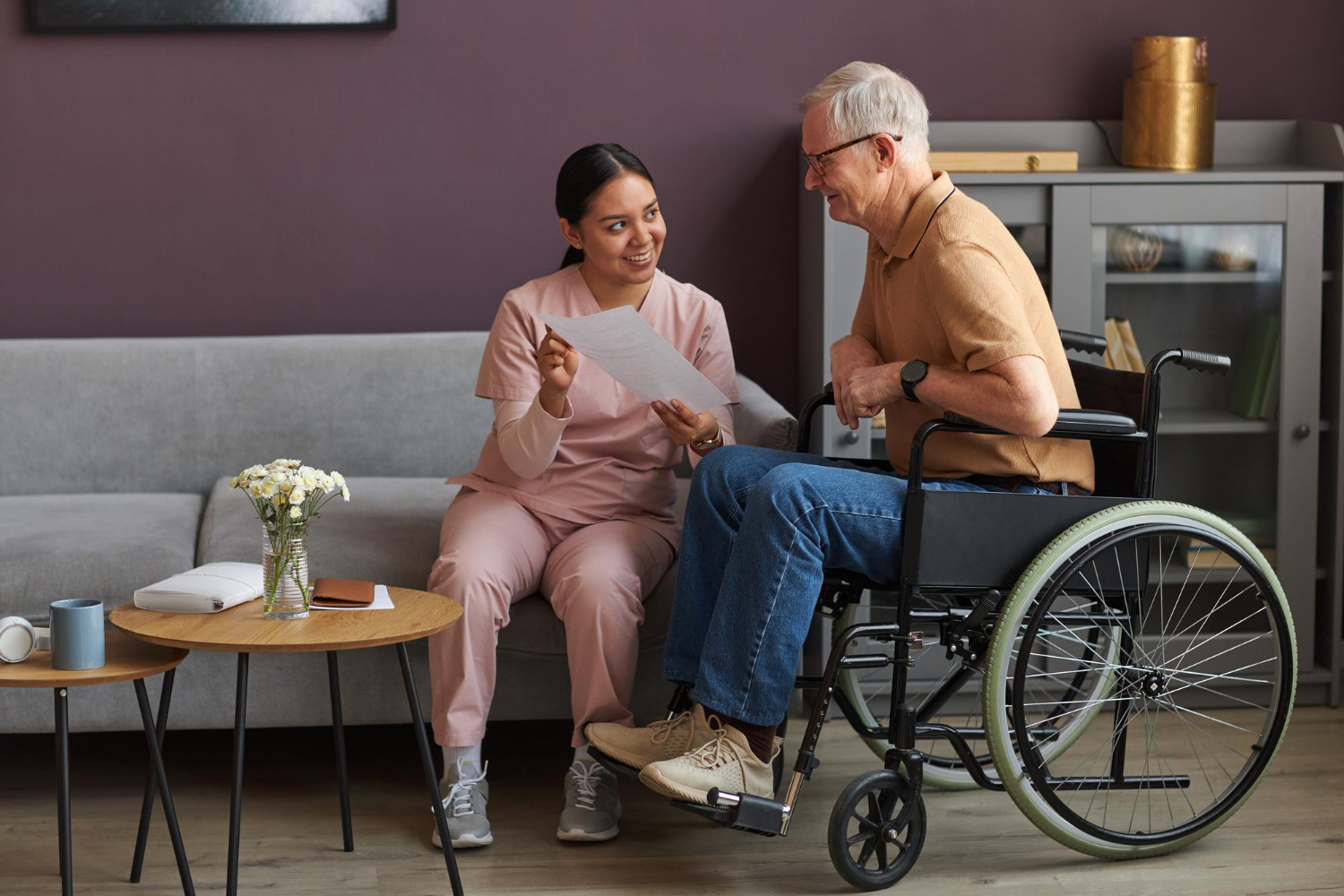
Moving into supported independent living is more than packing a bag and changing addresses.
For an NDIS participant, it can mean learning a new routine, meeting new people, adjusting to a different level of support, and making everyday decisions in a new environment.
The transition matters because the first stage of SIL can shape how comfortable and confident a person feels in their new home.
For people exploring supported independent living in Adelaide, understanding what happens before, during, and after the move can make the process feel much less overwhelming.
SIL is designed to provide support with daily life while helping a person live as independently as possible and build their skills.
The NDIS describes SIL as a home and living support for people with significant support needs, rather than simply a type of accommodation.
So, what actually happens during the transition?
The Transition Starts Before Moving Day
A common mistake is to think of transition as the day someone moves into their new home.
In reality, the process should begin well before the boxes are packed.
The participant, family or carers, support coordinator, provider, and other relevant professionals may need to work together to understand what the person needs to make the move successful.
This can include looking at:
- daily routines
- personal care requirements
- communication preferences
- medication or health-related routines
- cooking and meal preferences
- mobility and accessibility needs
- behavioural or sensory considerations
- community activities
- preferred social routines
- relationships with family and friends
- goals for developing greater independence.
The purpose is not to create a profile that defines the person by their disability.
It is to understand how the person lives.
A successful transition should be based on the participant’s strengths, preferences, support needs, and goals, rather than simply matching them to an available room.
Step 1: Understanding Whether SIL Is The Right Fit
Before discussing furniture, housemates, or moving dates, there is a more fundamental question:
Is SIL actually the right home and living support for this person?
SIL is intended for people who need substantial assistance or supervision with daily life.
Current NDIS guidance explains that SIL can involve support across the day and overnight, depending on a person’s needs. It can include assistance with personal care, cooking, eating and household tasks, while also focusing on developing independence.
But SIL is not the only best option for everyone who wants to live independently.
Other NDIS home and living options can include Individualised Living Options, assistance with daily living, Specialist Disability Accommodation and other arrangements. The right option depends on the participant’s circumstances and support requirements.
This is why transition planning should begin with the person’s desired lifestyle, not with a vacant property.
Step 2: Building A Picture Of Everyday Life
Once SIL is being considered, the next stage is understanding what support looks like in real life.
This is where details that may seem small become surprisingly important.
What time does the participant usually wake up?
Do they prefer a quiet morning?
Can they prepare breakfast independently?
Do they need prompting or physical assistance?
What happens when plans change unexpectedly?
Which activities do they enjoy?
How do they communicate that they are uncomfortable, tired, or overwhelmed?
These details help create a more realistic support approach.
For example, two people may both need assistance with cooking, but their support may look completely different.
One person might need someone to help them organise ingredients and follow a recipe.
Another might need hands-on assistance with most of the meal preparation.
The goal is not to do everything for the participant. It is to provide the right level of assistance while creating opportunities for the person to participate and develop skills.
Step 3: Getting To Know The New Home
The physical environment is an important part of transition.
A participant may have the opportunity to visit the home before moving in, spend time in shared areas, meet potential housemates and become familiar with the neighbourhood.
This can answer practical questions that are difficult to resolve from photographs.
Where is the bedroom?
Where will personal belongings be stored?
What does the kitchen look like?
Where can someone have quiet time?
What are the shared spaces like?
How close is the home to familiar shops, services or community activities?
For someone who finds unfamiliar environments difficult, repeated visits can also help make the new surroundings more predictable.
A home should not simply be suitable on paper. It needs to make sense for the person who will live there.
Step 4: Meeting The People Involved In Support
The people providing support can have a major influence on how the transition feels.
Participants may need time to become familiar with support workers, understand how communication works, and establish comfortable routines.
This is particularly important because independence does not mean doing everything alone.
A participant may still need substantial support while having meaningful control over everyday decisions.
The NDIS’s current SIL Practice Standards specifically include supported decision-making, safeguarding, practice governance and agreements around tenancy, housing and support arrangements.
That reflects an important principle: support should enable a person’s life, not take ownership of it.
Step 5: Creating A Transition Plan
A useful transition plan turns a major life change into smaller, manageable stages.
Depending on the person’s circumstances, this could include:
Before moving
- visiting the home
- meeting support workers
- discussing routines and preferences
- planning belongings
- confirming important support information
- establishing communication arrangements.
During the move
- helping the participant settle into their room
- keeping familiar belongings accessible
- following familiar routines where possible
- allowing time to process the change
- making sure important support information is available.
After moving
- monitoring how the participant is settling
- reviewing routines
- identifying anything that is not working
- adjusting support where appropriate
- continuing to build independence.
The plan should remain flexible.
A transition is not necessarily successful simply because the participant has physically moved into the property.
The real test is whether the person is beginning to feel that this is their home.
Step 6: The First Days May Feel Different From Expectations
The first few days can be exciting.
They can also be tiring.
Even a positive change can require considerable adjustment. A participant may need time to learn where things are, understand household routines, communicate preferences, and become comfortable around new people.
Some people settle quickly.
Others need considerably longer.
There is no single correct timeline.
This is why it can be unhelpful to judge the transition too early. A difficult first week does not necessarily mean SIL is unsuitable. Equally, a smooth first few days do not mean all transition work is finished.
The support team and participant may need to keep reviewing what is working.
Step 7: Independence Develops Gradually
One of the most important parts of SIL is recognising that independence can look different from person to person.
For one participant, independence might mean preparing a simple meal.
For another, it could mean choosing what to eat, planning the shopping list and directing someone else to assist with cooking.
It might involve learning to:
- manage a morning routine
- choose clothing
- prepare meals
- maintain a bedroom
- participate in household tasks
- use public transport
- make appointments
- communicate preferences
- manage social activities
- make decisions about daily life.
The level of assistance may change as skills, confidence, and circumstances change.
The objective is not to remove support simply to demonstrate independence.
The objective is to find the appropriate balance between support and autonomy.
What Can Make The Transition Harder?
Not every transition goes smoothly.
Several factors can make the adjustment more challenging.
- Too much change at once
Moving house, changing routines, meeting new people and adjusting to new expectations can be a lot to process. Where possible, gradual familiarisation can help.
- A poor match with the household
Shared living involves relationships.
Different sleep patterns, communication styles, noise preferences, interests and routines can affect how comfortable people feel.
Household compatibility should therefore be considered alongside support needs.
- Support that is too rigid
A participant may have support needs, but that does not mean every part of their day needs to follow someone else’s timetable.
Rigid routines can make a person feel as though they are being managed rather than supported.
- Not listening to the participant
Families and professionals can sometimes become so focused on safety and logistics that the participant’s preferences receive less attention.
The person’s voice should remain central to decisions about their home and daily life.
- Treating the move as the finish line
Moving in is the beginning of a new chapter, not the completion of the process.
The participant may discover new preferences once they experience the home in practice.
That feedback matters.
How Families Can Support A Successful Transition
Families often experience their own adjustment when a loved one moves into SIL.
It can be difficult to step back after years of providing daily support.
One useful approach is to stay involved while allowing the participant to develop their own relationship with the new home and support team.
Families can help by:
- sharing useful information about routines and preferences
- listening to the participant’s concerns
- keeping communication open
- allowing time for adjustment
- respecting the participant’s choices
- raising concerns when something genuinely does not seem right
- celebrating progress that might otherwise go unnoticed.
Independence does not have to mean independence from family.
It can mean having greater control over how support, relationships and everyday life fit together.
A Changing SIL Landscape In 2026
There is also an important change happening across the NDIS SIL sector.
From 1 July 2026, providers delivering SIL are subject to mandatory registration requirements.
Existing unregistered providers have a transition period to apply for registration, with the NDIS Commission stating that providers must apply by 1 October 2026 if they want to continue delivering SIL.
For participants and families, this makes provider due diligence particularly relevant during a transition.
It is reasonable to ask a prospective provider:
- Are you registered to deliver SIL?
- How will you involve me in transition planning?
- How will you match support to my daily routines?
- How will you support my independence?
- How will concerns or changes be handled?
- How will you communicate with my family or support network, where appropriate?
- What happens if the arrangement is not working?
These questions are not about finding a “perfect” provider.
They are about understanding how the provider approaches the participant’s life.
The NDIS also maintains participant data on SIL funding, with the latest published SIL dataset current to 30 June 2026.
This shows that SIL remains a defined part of the broader NDIS home and living landscape, alongside options such as SDA and other supports.
What Should A Good SIL Transition Feel Like?
There is no universal checklist for a successful transition.
But there are some useful signs.
The participant is beginning to:
- understand their new routines
- feel comfortable asking for help
- make everyday choices
- build relationships with support workers
- participate in household activities
- spend time in their local community
- develop or maintain skills
- express what they like and dislike
- feel a sense of ownership over their home.
Most importantly, the person should have a voice in what happens next.
A transition should not be something that happens to a participant.
It should be something they are supported to participate in.
FAQs About Transitioning Into Supported Independent Living
How long does it take to transition into SIL?
There is no standard transition period that applies to every participant. The timeframe can depend on support needs, familiarity with the environment, housing arrangements, availability of supports, and how comfortable the participant feels.
Can I visit a SIL home before moving in?
This depends on the provider and the available arrangements, but visiting a potential home before moving can help a participant understand the environment, meet people, and ask questions before making decisions.
Can family members be involved in the SIL transition?
Yes, where appropriate and consistent with the participant’s wishes and decision-making arrangements. Family members can provide valuable information about routines and preferences, while the participant’s own choices should remain central.
Does SIL mean I have to live with other people?
Not necessarily. SIL arrangements can vary, and the appropriate home and living option depends on the person’s support needs and circumstances. The NDIS also recognises other home and living options that may be more suitable for some participants.
Does SIL pay for rent and groceries?
No. SIL funding is for the relevant disability support, not ordinary living expenses such as rent or groceries.
What happens if I do not settle into my SIL arrangement?
The first step is usually to communicate what is not working and review the support arrangement. This may involve changes to routines, support approaches, or other aspects of the arrangement. If concerns remain, the participant and their support network may need to explore other options.
Conclusion: Transition Is About More Than Moving House
The transition into supported independent living is not simply a logistical exercise.
It is a process of turning a new address into a place where someone can build routines, make decisions, develop skills, maintain relationships, and feel at home.
The strongest transitions begin with the person rather than the property. They consider what the participant wants from their life, what support they actually need, and what will help them exercise greater choice and control.
How My Life My Way Can Support Your Next Step
Moving into SIL can feel much easier when the transition is planned around the individual rather than a standard process.
My Life My Way provides disability support focused on each participant’s lifestyle, needs, interests and goals.
If you are exploring supported independent living in Adelaide, our team can help you understand your support needs, discuss your goals and consider what a more independent home life could look like for you or your loved one.
At My Life My Way, we understand that no two participants have the same routines, preferences, support requirements or goals. Our approach to supported independent living is centred on understanding the individual first, then building support around the way they want to live.
From developing everyday living skills and supporting personal routines to encouraging community participation and greater choice in daily life, our focus is on providing support that works with the participant, not simply doing things for them.
If you or someone you support is considering SIL in Adelaide, you do not have to work through the transition alone. Talk to My Life My Way today to discuss your goals, support needs and the next steps towards a living arrangement designed around you.
Ready to explore your SIL options? Contact My Life My Way today and start the conversation.